Where everything goes when the season changes
A seasonal wardrobe change needn’t begin with deciding what to get rid of. Start with what each piece needs to make it through the next few months.
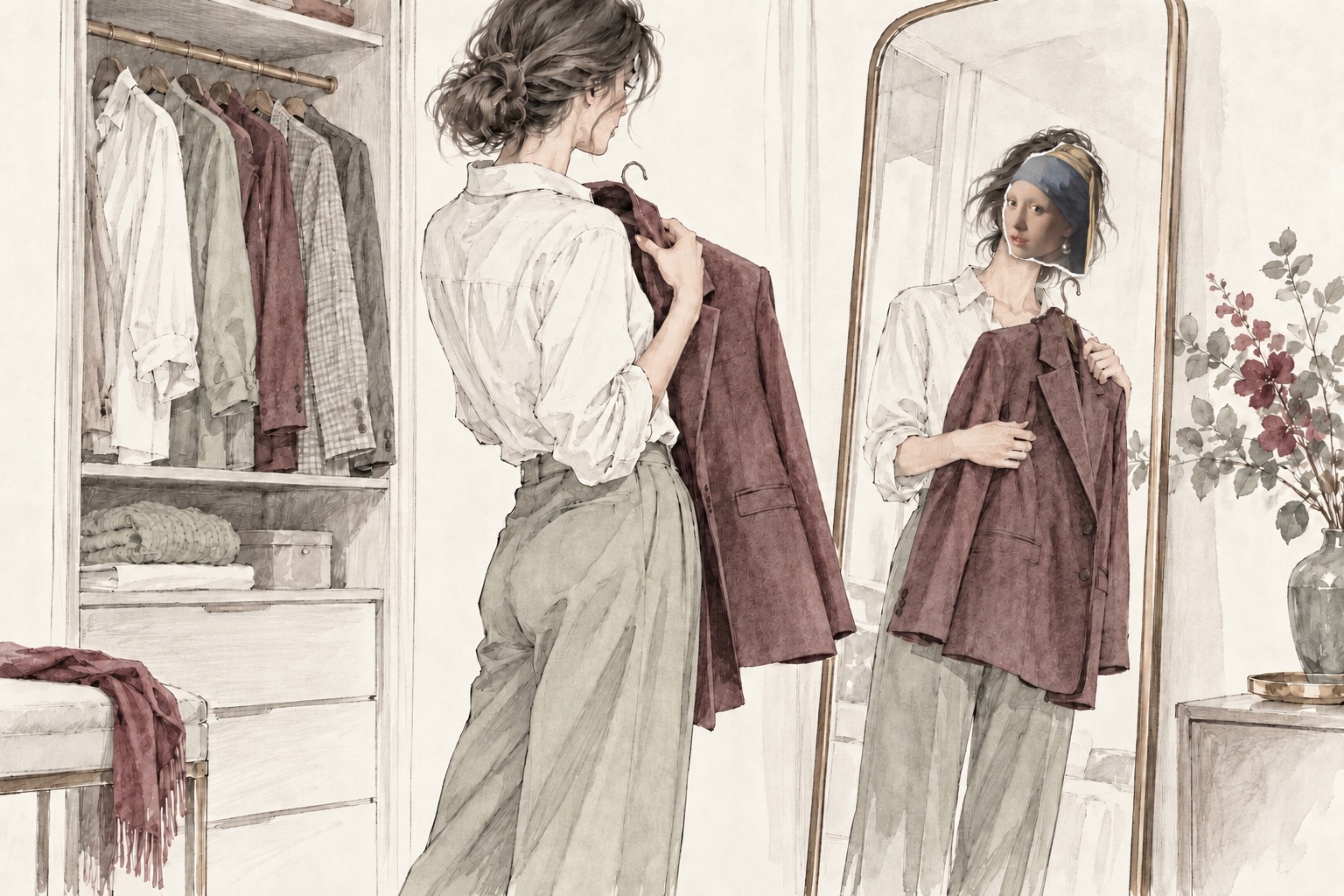
See what will still come out of the wardrobe.
The same hanger won’t do for a shirt and a heavy jumper. They don’t need the same place in the wardrobe, either.
Hang it or fold it?
A shirt and a chunky jumper need different treatment. The shirt can hang to hold its shape and avoid creases. The heavier knit is better folded: months on a hanger can leave its shoulders stretched out.
Make that distinction before looking for space. Structured pieces that can carry their own weight go on the rail; anything likely to stretch belongs on a shelf. Don’t pack the rail so tightly that taking out one jacket drags six others along with it. A wardrobe has a real capacity, however persuasive slim hangers may be.
Give the easiest spot to what you use
In a supermarket, the most accessible shelf is valuable. It is in a wardrobe too, although we aren’t trying to sell you anything.
Keep the clothes you need over the coming weeks where you can reach them without stretching. Try taking out a hanger and putting it back. If you have to stand on tiptoe or move a whole row aside, that isn’t a good place for something you wear often. A comfortable height depends on the wardrobe and the person using it; there is no universal measurement.
Higher shelves are better for things you won’t need each morning. This season’s shoes can sit lower down, visible, with enough room to take out one pair without shifting the rest.
High shelvesOut-of-season pieces, clean and dry.
Lower shelfThis season’s shoes, visible and easy to take out.
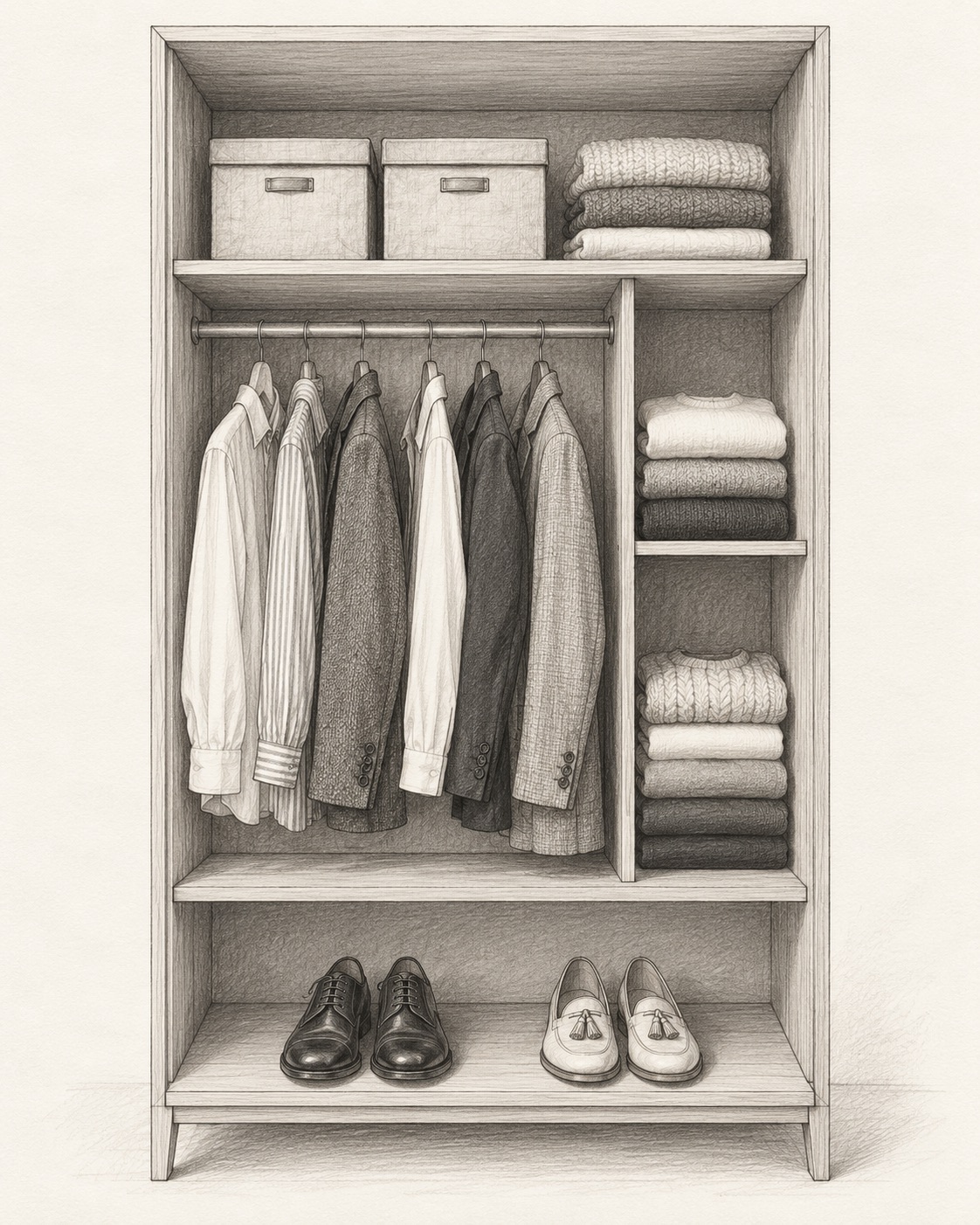
Easy reachWhat you wear these weeks, without stretching for it.
Make room for the in-between weather
In October, a light shirt may still leave the house, but it might need a jacket nearby. Keep the two close. Not as a compulsory outfit; they simply belong to the same uncertain stretch of weather.
A short section of rail or a transitional shelf saves you swapping the entire wardrobe from summer to winter whenever the temperature changes. When the cold settles in, that space can change with it. Your wardrobe doesn’t have to be three months ahead of the forecast.
Stored clothes need a place too
Before storing clothes for months, make sure they are clean and completely dry. Choose a place without damp and don’t compress them until the box barely shuts. Label what is inside: ‘summer’ is less useful than ‘linen shirts and light dresses’ when you come back to it.
If you store wool or other vulnerable fibres, check on them now and then. The problem with a closed box isn’t that it is out of sight. It is finding out too late that damp or insects were inside.
Let it come back as you left it.
A good seasonal change is one that lets you take out a piece without wrestling the others, and find it in the same condition months later.
ARKLING