You have no style. Period.
What if what you call “your taste” also depends on what someone decided to show you?
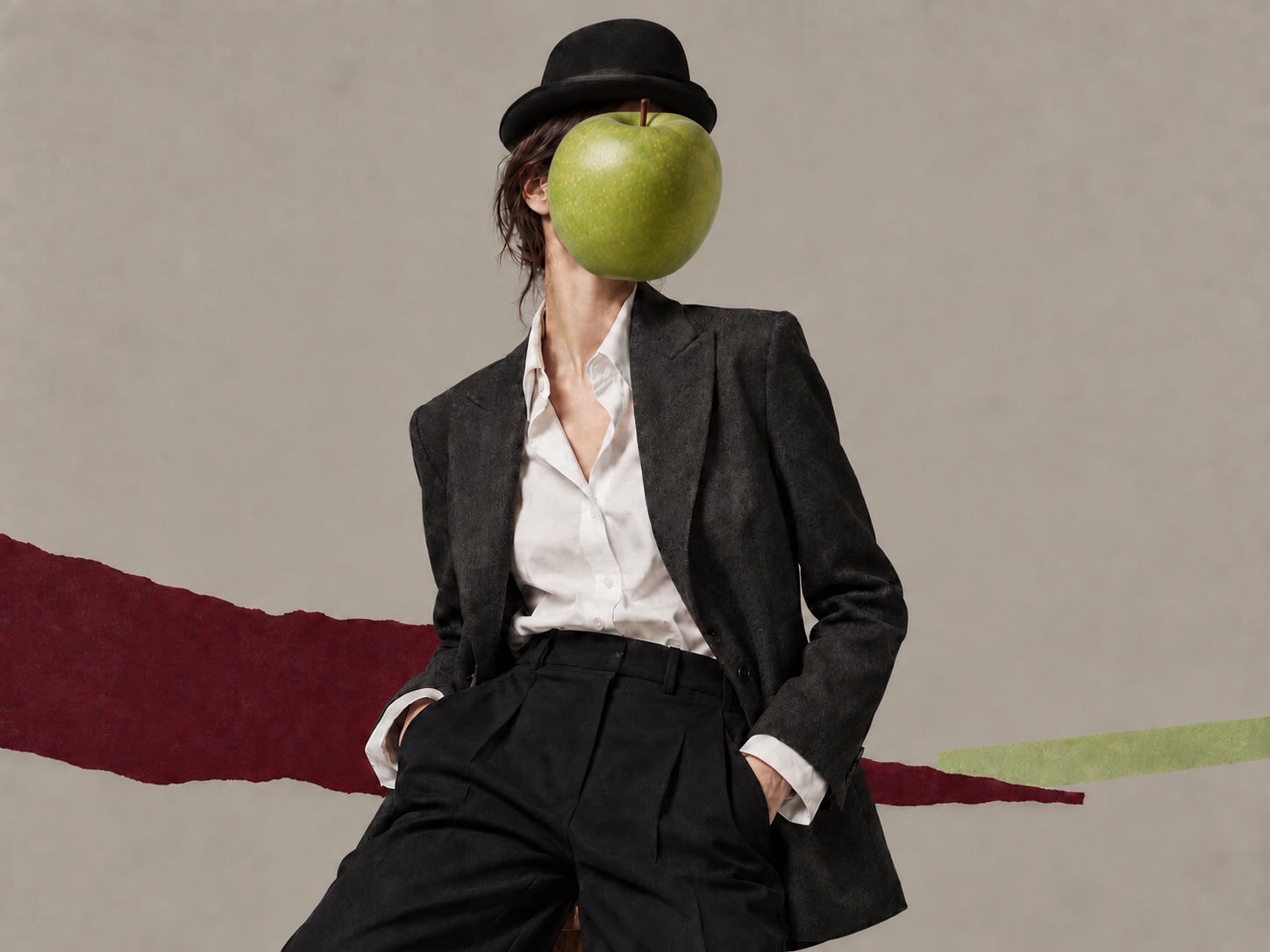
That is what you are made to think whenever a new way of dressing “well” appears. The blazer that was too big yesterday is suddenly the perfect size. The shoes you would not have looked at twice become essential after appearing in twenty outfits. And when none of it works with the clothes you own, the diagnosis feels personal: you have no style.
Convenient. Now they can sell you another one.
Your feed is not your taste
You save a photo for the skirt. The app shows you three more. Then the same skirt with a white shirt, with a leather jacket, with the shoes you saw yesterday. A week later it seems to be everywhere. On your screen, at least.
Repetition matters. Psychologist Robert Zajonc found that seeing something repeatedly can increase how much we like it. His experiments were not about skirts, and they do not show that every preference is borrowed. But they help explain why a piece that initially left you cold may begin to feel familiar. And why familiar can sometimes feel like something you would have chosen anyway.
The myth of free choice
You open an app and see a hundred ways to dress. It looks like freedom. But someone decided which hundred you would see, in what order, and how often they would return.
Spinoza raised an uncomfortable point: we are aware of what we want, but not always of what caused that desire. He was not talking about a feed. Still, the question fits: when you say “this is so me”, what are you recognising, and what have you learned to recognise after seeing it everywhere?
There is another limit to what we know about our decisions. In an experiment on choice, researchers quietly switched the outcome some people had selected. Several did not notice and gave reasons for a different choice. The study does not say clothing purchases work this way, or settle the question of free will. It does suggest something less dramatic and more useful: we can tell a convincing story about our tastes without fully knowing how we arrived at them.
Choosing is still choosing. What does not exist is a neutral shop window where every option waits on equal terms for your “authentic style” to appear.
The recommendation that is also an ad
Sometimes the piece does not come from a brand. It arrives in a photo from someone you follow, part of an outfit you might save even without a commercial tag. Research on influencer advertising found that the way a collaboration is disclosed affects how people recognise and evaluate that content.
You do not need to distrust every good photo. You do need to be able to see when a recommendation is also a sale. If everything is presented as personal taste, the commercial intention disappears precisely where it would be useful to spot it.
What remains when you close the app
One photo. Another. The same skirt with a different shirt. Hit after hit after hit. Eventually you stop thinking, “I have seen it a lot.” You think, “I think I like it.”
You may genuinely like it. The question is whether you can still separate the skirt from all the times it has been shown to you.
Go back to a photo you saved weeks ago. Cover the brand and stop looking at who is wearing the outfit. Are you interested in the garment or in the styling choice? Maybe it was the length of the jacket over the skirt. Maybe the open shirt, giving an overly proper combination some room to breathe. You can try that without buying the exact thing you saw.
And if it does not work when you try it, you have learned something too. Your style does not have to match whatever sells best on your screen.